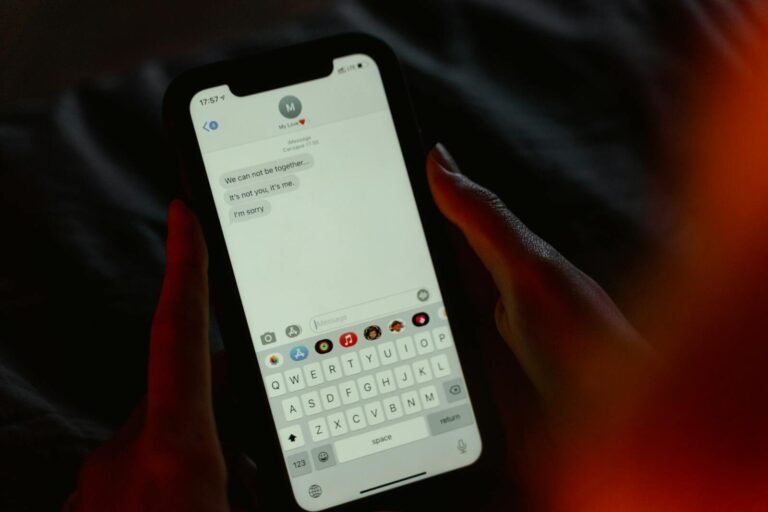

10 Signs You Are Finally Healing From a Breakup (Even If It Doesn’t Feel Like It)
You woke up this morning and you still thought about them.
Maybe you checked their Instagram again. Maybe you replayed the last conversation in your head. Maybe you cried in the shower and told yourself you should be over this by now.
And that thought, “I should be over this,” is the one that hurts almost as much as the breakup itself.
Here is the truth nobody tells you: healing from a breakup almost never feels like healing. It does not arrive as one big, obvious shift. It sneaks in quietly. And because it is so quiet, most people miss it completely.

If you are searching for signs you are healing from a breakup, there is a good chance you are already further along than you think. This article will show you what real recovery actually looks like, backed by real research, so you can finally stop wondering if you are broken and start noticing that you are not.
Sign 1: You Think About Them Less Often Without Even Trying
Right after a breakup, your brain is basically stuck on a loop. You think about them when you wake up. You think about them when you eat. You think about them in the cereal aisle, which is somehow the worst place for it.
This is not weakness. This is neuroscience.
Research published in Psychological Science by Sbarra and Coan found that romantic breakups activate the same regions of the brain as physical pain. Your brain is not being dramatic. It is genuinely processing something that hurts as much as getting hurt physically.
That loop does not stop overnight. But at some point, something shifts.
You realize it is 3pm and you have not thought about them since breakfast. You finish a whole episode of your show without pausing to wonder what they are doing. The mental loop does not disappear; it just runs less often.
That is the sign. Not that you never think about them. But that the thinking happens naturally less, without you forcing it.
What you can do right now: Keep a simple note in your phone. Every time you notice you went two or more hours without thinking about them, add a mark. Seeing the pattern helps. Progress becomes real when you can see it.
Sign 2: You Feel Small Moments of Joy and You Do Not Feel Guilty About Them

One of the earliest signs of real healing is also one of the easiest to dismiss.
You laugh at something your friend says. You enjoy your coffee. A song comes on and instead of making you sad, it just makes you want to turn it up.
And then, almost immediately, you feel guilty. Like enjoying something means you did not really love them. Like moving forward is a betrayal of the relationship.
It is not. Those small moments of joy are not signs that the grief is over. They are signs that your capacity for happiness is still there. It did not break. It just went quiet for a while.
A study from the Journal of Positive Psychology found that 71% of people who had recently gone through a breakup reported meaningful personal growth and positive emotions at around the 11-week mark, including people who were the ones broken up with. The joy comes back for most people. And when it starts coming back for you, even in tiny amounts, that is your healing showing up.
What you can do right now: Write down one small thing each day that felt good, even for a minute. A good meal. A funny text. Sunlight through a window. You are training your brain to notice that life still has good things in it.
Sign 3: Your Sleep and Appetite Are Slowly Getting Back to Normal

A lot of people do not connect the physical stuff to emotional healing. But they are the same thing.
When a relationship ends, your dopamine and serotonin both drop at the same time. That combination disrupts your sleep, your appetite, and your ability to feel okay in your own body. Neuroscientist Dr. Lucy Brown at the Albert Einstein College of Medicine confirmed that the brain’s response to a recent ex can look a lot like the response to an addictive substance. It is a withdrawal. Your whole system is recalibrating.
So when your sleep starts to stabilize, when food starts tasting good again, when your body starts to feel like yours again, that is not a small thing. That is your nervous system beginning to settle.
You may not notice it until one morning you sleep through the night and wake up thinking, “Huh, I actually slept.” That moment matters.
What you can do right now: Protect the return of your routine. If sleep is coming back, do not sabotage it by staying up scrolling. Same bedtime. No checking their social media before bed. Let your body finish what it started.
Sign 4: You Are Angry, and That Is Actually a Good Sign
Anger gets a bad reputation in breakup recovery. People feel like they should be past it, or that it means they have not healed, or that it makes them a bad person.
But here is what anger actually means: you believe you deserved better.
That is a self-worth signal. It is hard to be angry on behalf of yourself if you think you are worthless. Anger, in the early-to-middle stages of healing, is proof that some part of you knows you had value in that relationship, and that value was not treated right.
Dr. Lisa Marie Bobby, a licensed psychologist and founder of Growing Self Counseling, describes this as moving out of the “withdrawal” stage of a breakup. The initial phase is shock and grief. Anger means you are moving. That is forward momentum, even when it does not feel like it.
The key is what you do with the anger. Processing it is healing. Acting on it, by texting them, posting about them, or going through their profiles looking for something to be more angry about, keeps you stuck.
What you can do right now: Move your body with the anger. A fast walk, a workout, dancing in your kitchen. Physical movement metabolizes the cortisol that anger creates. Write an unsent letter if you need to. Just do not send it.
Sign 5: You Stop Checking Their Social Media Without Having to Fight the Urge

There is a big difference between not checking their profile because you are white-knuckling your willpower, and not checking because you simply forgot to.
The first one is discipline. The second one is healing.
Checking an ex’s social media creates a dopamine loop. Every check is a small hit. Will there be something new? Are they sad? Are they happy? Are they with someone? Your brain gets addicted to the information, even when the information hurts you.
Research cited in the Journal of Social and Clinical Psychology found that people who avoid checking an ex’s social media report healing about three weeks faster on average. The same research connected daily checking with higher rates of depression and ongoing anger.
So when you notice you went three days and did not even think to check, that is not nothing. That is your brain finally releasing the habit loop. The obsession is losing its grip.
What you can do right now: If you are still in the effortful phase, use an app like One Sec or Freedom to create a pause before you can open their profile. The goal is to outlast the urge until it fades naturally. It will.
Sign 6: You Start Feeling Curious About Your Own Future
When you are deep in grief after a breakup, the future does not feel exciting. It feels blank, or scary, or just empty where they used to be.
So when curiosity starts to creep back in, even small curiosity, that is a real sign.
You browse a travel site for a place you have never been. You think about signing up for a class. You wonder what your life could look like in a year. You do not have a plan. You just have a flicker of interest in your own future, separate from theirs.
Research published in SAGE Open in 2025 by researchers Yue and Cui found that self-concept clarity, basically knowing who you are outside of a relationship, directly drives optimism, resilience, and positive adjustment after a breakup. That curiosity about your future? That is self-concept clarity starting to rebuild.
You are not just healing from something. You are starting to move toward something.
What you can do right now: Write down three things you want to try, do, or explore in the next six months. They do not have to be big. A restaurant you want to go to counts. The act of writing them down shifts your brain from past-facing to future-facing.
Sign 7: You Can Talk About Them Without Completely Falling Apart
In the early weeks after a breakup, even hearing their name can make your chest feel like it is caving in. Someone mentions something casually, and suddenly you cannot breathe.
That physical reaction is real. Mel Robbins, in her podcast episode on healing from heartbreak, explains it as a neurological untangling. When you are in a relationship, you become wired together with another person. Your nervous system literally expects them to be part of your daily life. When they are gone, your system has to learn to function without that input. That takes time.
But at some point, something changes. A friend asks about the relationship and you tell the story and you do not cry. You mention them in passing and it hurts a little but it does not destroy your afternoon. You can hold the memory without being swallowed by it.
That is not the same as being over it. It just means the wound is closing a little. You can touch it without it bleeding.
What you can do right now: If you have been avoiding talking about them out of fear of breaking down, try a timed 10-minute conversation with someone you trust. Let yourself say it out loud. Getting through that conversation without the world ending is evidence your nervous system is healing.
Sign 8: You Are Reconnecting With Who You Were Before the Relationship

In a long relationship, it is easy to lose track of yourself. Your identity starts to blend with theirs. Your plans include them by default. Even your taste in music or food or movies slowly shifts to match.
When the relationship ends, a lot of people feel like they do not know who they are anymore. And that feeling is real, but it is also a starting point.
Healing starts to look like reaching back. Texting a friend you lost touch with. Picking up a hobby you dropped. Eating food they never liked but you loved. Doing something solo on a Saturday and realizing it was actually fine.
Psychology Today, in a January 2025 article on healing after heartbreak, specifically recommends what they call “dating yourself.” That means trying new things, taking yourself out, and spending time getting to know who you are on your own again. This is not about distraction. It is about reclaiming a self that was always there, just set aside for a while.
What you can do right now: Write a list of five things you loved doing before the relationship. Pick one. Do it this week. It might not feel great at first, and that is okay. Doing it anyway is the point.
Sign 9: You Have Learned Something Real About Yourself
There is a difference between ruminating and reflecting.
Ruminating is the loop. “Why did they do that? What did I do wrong? Why was I not enough?” It circles without going anywhere.
Reflecting is different. It is asking, “What does this show me about what I need? What patterns do I want to change? What do I know about myself now that I did not know before?”
When you start doing the second kind of thinking, that is real progress.
Research from the Journal of Positive Psychology found that people who actively engage in post-breakup reflection report meaningful personal growth within six months. And a 2022 study in the British Journal of Health Psychology found that reframing a breakup as an opportunity for growth reduces emotional pain by up to 46%.
This sign often feels uncomfortable. The insights that come from a breakup are sometimes unflattering. You see patterns you do not love. You recognize ways you could have shown up better. That discomfort is not a bad sign. It means you are actually learning something, not just surviving.
What you can do right now: Answer this one question in writing: “What did this relationship show me about what I actually need from a partner?” One honest sentence is enough to start.
Sign 10: You Have Stopped Waiting for Closure From Them

Closure is one of the most misunderstood things about breakup recovery.
Most people believe closure is something the other person gives you. A final conversation. A real explanation. An apology. Some kind of official ending that finally lets you move on.
But that is not how closure works. If it were, then everyone who got that final conversation would be healed, and everyone who did not would be stuck forever. And that is not what happens.
Real closure is internal. It is the moment you decide you have enough information. You do not need them to explain it differently. You do not need them to feel bad. You do not need them to admit they were wrong for you to be okay.
Dr. Lisa Marie Bobby puts it plainly: closure comes from within. The real turning point is when you stop asking “why did this happen to me” and start asking “what is possible for me now.”
This sign usually comes last. It is one of the deeper ones. And you might not even notice it until you realize you have not thought about sending that message in a while, and you do not really want to anymore.
What you can do right now: Write a closure letter. Not to send. Just for you. Write what you are releasing. Write what you are keeping. Write what you are choosing to carry forward. The act of writing it is the closure. You do not need them to give it to you.
How Long Does Healing Actually Take?
This is the question everyone wants answered, and the honest answer is: it depends.
A widely cited study from the Journal of Positive Psychology found that most people start feeling noticeably better around 11 weeks after a breakup. For longer relationships, divorces, or deeply painful endings, that timeline stretches further, sometimes 12 to 18 months or more.
What the research consistently shows is that how you spend that time matters a lot. People who actively reflect, stay connected with others, and take care of their physical health tend to heal faster than people who isolate or stay in contact with an ex in ways that keep reopening the wound.
There is no finish line where you suddenly feel nothing about it. That is not the goal. The goal is that it stops running your life.
What to Do If You Feel Completely Stuck
Some people do everything right and still feel like they cannot move. If that is you, that is worth paying attention to.
Sometimes a breakup uncovers older grief, older patterns, or older wounds that were there long before this relationship ended. When that happens, time alone may not be enough.
Talking to a therapist who works with relationships and heartbreak can make a real difference. If you want to find someone, the Psychology Today therapist directory lets you filter by specialty, location, and whether they offer online sessions.
There is no shame in needing more than time. Sometimes healing needs help.
You Are Closer Than You Think
Healing from a breakup rarely looks the way you expect. It does not arrive in a single moment. It shows up in the hours you forgot to check their profile. In the afternoon you laughed without stopping yourself. In the moment you wrote something honest about yourself and felt surprised by how clearly you saw it.
If you recognized even two or three of these signs you are healing from a breakup, you are further along than you feel right now. The gap between where you are and where you think you should be is not proof that you are failing. It is just the uncomfortable middle, and the middle means you are moving.
Be patient with yourself. The progress is real, even when you cannot feel it yet.