
28 Conversation Starters That Spark Attraction
There is a quiet kind of magic in a really good question. Not the polished, interview-style kind, but the kind that catches someone off guard in the best possible way and makes them lean in a little closer. The kind that turns a forgettable evening into a story you both retell for years.
Science backs this up in a big way. Researchers at the University of Arizona and Washington University in St. Louis tracked the conversations of college students over four days and found that the happiest participants had twice as many substantive conversations as the unhappiest ones, while spending a third as much time on idle small talk. More meaningful conversation, more happiness. It really is that simple.
And then there is the famous work of psychologist Arthur Aron, whose landmark research showed that mutual vulnerability through self-disclosure fosters closeness in a way that very little else can. Strangers who asked each other progressively personal questions for just 90 minutes reported feeling genuinely, surprisingly close to one another afterward. The questions themselves were doing the relational heavy lifting.

So whether you are meeting someone new at a party, trying to break out of a conversational rut with a long-term partner, or just looking to feel a little more connected in your everyday life, the right opener matters.
Here are 28 conversation starters, organized by when and how to use them, along with a little insight into why each one works so well.
The Killer Openers: Questions That Get People Talking Right Away

These are your go-to questions for social situations, parties, dates, and any time you want to skip the surface and get somewhere real without scaring anyone off.
1. Tell me about you.
Simple, open, unhurried. It gives the other person complete freedom to lead you somewhere they actually want to go, rather than answering a narrow question they did not choose. People reveal what matters most to them when they are the ones steering.
2. What’s your story?
A slight twist on the above, but with more of an invitation to narrative. Everyone has one. Most people are just waiting for someone to ask.
3. What personal passion project are you working on right now?
This one is electric. Not “what do you do for work” but what fires you up on your own time, in your own space, for your own reasons. You will learn more about a person in their answer to this question than in an hour of standard small talk.
The Harvard Business School has noted that the opening minutes of an interaction shape how competent and likeable we find someone, so leading with genuine curiosity is one of the smartest moves you can make.
4. Working on anything exciting lately?
The word “exciting” does a lot of work here. It sets an expectation of enthusiasm and signals that you are interested in energy, not just activity. People who answer this question often surprise themselves with how much they have to say.
5. How do you know the host?
A classic for a reason. It anchors the conversation in shared context and almost always opens up an interesting thread, whether they went to college together, are coworkers, or met on a hiking trail in Peru.
6. Have you been to an event like this before?
Contextual questions are underrated. They create common ground immediately because you are both standing in the same room having the same experience. A shared frame of reference is one of the fastest ways to build rapport.
7. What was the highlight of your day today?
Researchers at the University of Utah found that on days when partners shared positive events with each other, both people reported better moods by the end of the day. Asking for a highlight specifically primes someone to search for the good in their day, which is a gift to both of you.
8. What was the highlight of your week?
Same principle, wider window. This one works especially well for people you see regularly, like a coworker, a neighbor, or a long-term partner. It keeps you from defaulting to the dreaded “how was your day?” which, as most of us know by now, tends to generate nothing more than a one-word answer.
9. What was the high-point and low-point of your day so far?
Sometimes called “Roses and Thorns,” this two-part question is used by therapists, families at dinner tables, and couples who have been together long enough to know that real intimacy requires hearing about both the good and the hard. Research confirms that sharing both positive and negative events leads to greater feelings of intimacy and connectedness over time, and that negative disclosures do not cause the emotional harm most of us worry they will.

10. Is this your busy season? Is this a busy time for you?
A question that says: I see you. I recognize that you have a whole life outside this moment, and I am curious about the rhythm of it. It works beautifully in both professional and personal settings.
11. What are you doing this weekend? What’s your favorite thing to do on the weekends?
Light and easy but genuinely revealing. Weekend plans say a lot about who a person is and what they prioritize when no one is telling them what to do.
12. What are your favorite restaurants around here?
An invitation to share enthusiasm. People who love food will light up. People who do not will still have an opinion. Either way, you now have a thread to pull.
13. Keeping up with [sport] recently?
If you know someone follows a sport or team, this question does something clever: it shows you have been paying attention to them, which people notice and appreciate more than almost anything else.
14. All the food looks so good… I’m not sure what to get! What are you thinking? Or what have you tried?
Social events with food are a gold mine for low-stakes conversation starting. Bonding over indecision or shared enthusiasm for a cheese board is genuinely delightful, and it requires very little vulnerability from either person.
15. What a beautiful/cool/ugly/bizarre venue. Have you been here before?
Commenting on your shared environment is one of the oldest and most reliable conversation starters in existence. Specificity is what elevates it from generic to genuinely engaging. Do not just say “nice place.” Point to something real.
Going Deep: Questions for When You Want to Really Know Someone
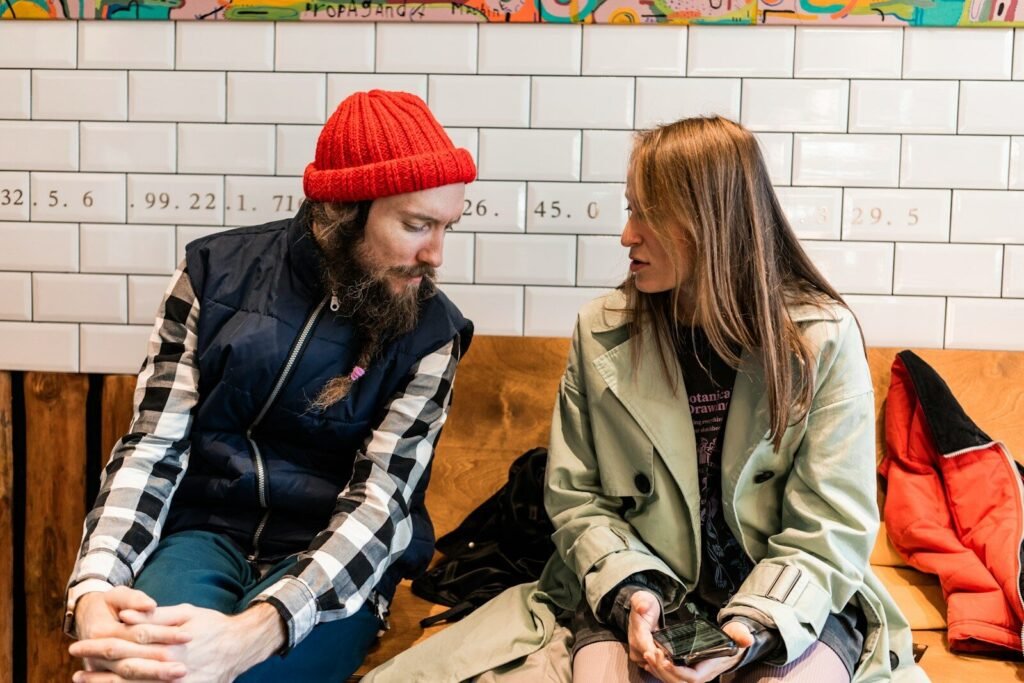
These questions are best used once you have already established a little rapport, or in relationships where some level of trust already exists. They are the ones that tend to linger.
16. What’s your biggest fear?
Vulnerability is the engine of intimacy. Psychologist Arthur Aron’s research demonstrated that sharing personal thoughts, beliefs, and emotions in a reciprocal way builds trust and closeness faster than almost any other activity. This question invites exactly that. It takes courage to ask and even more to answer honestly, which is precisely what makes it so connecting.
17. If you had to pick any character in a book, movie, or TV show who is most similar to you, who would you choose and why?
This is one of the most creative and revealing questions on this entire list. It lets someone show you their self-perception through the safety of fiction, which often produces more honest answers than a direct question would. You will learn what they admire, what they relate to, and how they see themselves all at once.
18. What’s your biggest regret?
Not one for a first conversation, but extraordinary for deepening an existing one. Regret is where our values and our choices collide. Hearing what someone wishes they had done differently tells you almost everything about what matters most to them.
19. When you were growing up, what was your dream job? Is any part of that still true?
Oh, this one. This one has a way of making people get quiet for a second before they answer. It connects the person sitting across from you to their younger self, and the second part, “is any part of that still true?” is where the conversation gets truly alive.
The Gottman Institute, whose relationship research has shaped modern couples therapy, emphasizes that knowing your partner’s inner world, including their dreams and aspirations, is a foundational element of a lasting bond.
Event-Specific Conversation Starters: Questions Tied to the Season

Sometimes context does half the work for you. Seasonal and holiday conversations are wonderful because everyone at the table shares a common reference point, and shared experiences make connection so much easier.
Halloween
20. What’s the best Halloween costume you ever had?
An invitation into someone’s childhood, their creativity, and their sense of humor all at once. Almost everyone has a costume story. Bonus points if it was a disaster.
21. What’s the best Halloween costume you’ve ever seen?
Slightly different angle. This one reveals what someone finds funny, impressive, or memorable, which is a low-key way of learning about their taste and sensibility.
22. Do you like haunted houses or scary rides?
A direct, easy question with clear follow-up potential. Whether someone loves or hates being scared actually tells you quite a bit about their relationship with adrenaline and risk, which is more interesting than it sounds.
Christmas
23. How does your family celebrate?
Family traditions are emotional territory. They carry warmth, humor, grief, and history all at once. This question is an invitation to share all of that, and people rarely turn it down.
24. What’s the best Christmas memory you have ever had?
Memories framed around the senses, smells, lights, sounds, the weight of a box are the ones that feel the most alive in the telling. This question almost always produces a vivid, personal story.
25. What’s an ideal Christmas for you?
This one is subtly about values and not just tradition. Ideal versus actual is an interesting gap to explore. Someone’s ideal Christmas tells you what they find restorative, what they crave, and what kind of energy they bring into the holiday season.
Birthday
26. How do you usually celebrate your birthday?
Some people throw themselves parties. Some people disappear into a cabin with a book. Both are deeply telling. There is no wrong answer here, only a real one.
27. What was the best birthday you ever had?
Best-of questions invite people to revisit joy, which is always a good thing. They also almost always come with a story, and stories are where real connection lives.
28. What was the best birthday gift you ever had?
The most meaningful gifts are rarely the most expensive ones. Asking this question opens the door to conversations about what people actually value, who has loved them well, and what has made them feel truly seen.
A Few Final Thoughts on Making These Work
Having great questions is only the beginning. The other half of the equation is listening, actually listening, not composing your next response while the other person is still talking.
Research published in the journal Psychological Science found that the defining feature of substantive conversation is that real, meaningful information is exchanged at more than a trivial level of depth. The topic almost does not matter. What matters is that both people walk away knowing something true and real about each other that they did not know before.
Ask the question. Listen to the answer. Let it lead you somewhere unexpected.
That is, honestly, how most of the best conversations in your life will begin.