How to Create a Romantic Scavenger Hunt at Home
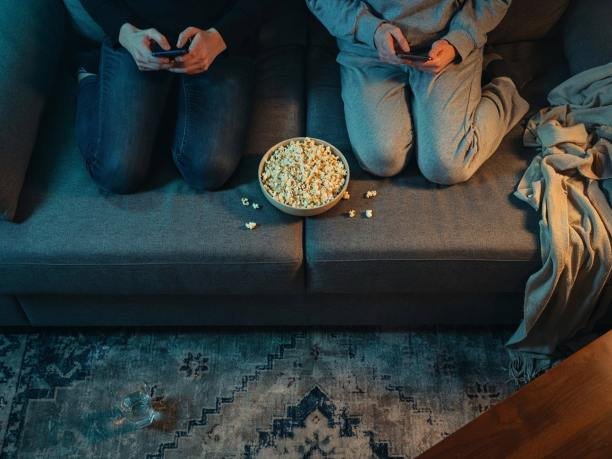
The average date in the United States now costs $189, up from $168 the year before. Half of Americans say they now go out less often, or pick cheaper plans, because of what a night out costs. So you stay home. Again.
That is not really the problem, though. The problem is that home has started to feel like a room you both scroll in. You still love him. You just cannot remember the last time you did something together that surprised either one of you.
A romantic scavenger hunt at home fixes that in about an hour. It costs almost nothing. You do not need a sitter, a reservation, or a free Saturday. You need a pen, some paper, and a plan.
This guide gives you that plan. You will get the exact setup steps, a clue bank you can copy tonight, five ways to match the hunt to your partner instead of to Pinterest, and the ending that makes the whole thing land.
Why a Scavenger Hunt Beats Another Dinner and a Movie
Your date nights are probably more predictable than you think. In a survey of married couples by The Knot, 90 percent said dinner or drinks was their go-to date, and about half said a movie. That is not a failure of love. It is just a rut.
Here is why that matters. Researchers who study couples have a name for the fix, and it is not romance. It is novelty. In a well known line of research, couples who did something new and exciting together reported less boredom and felt closer than couples who did something familiar and pleasant. Same partner. Same living room. Different result, just from doing something they had never done before.
You might be thinking you do not have the energy for exciting. Good news. A 2019 study found that the feeling of trying something new mattered more than the adrenaline. The hunt does not need to be thrilling. It just needs to be new.
And regular date nights are worth protecting. Only about 48 percent of married couples report going on dates regularly, and the ones who do report stronger commitment and more satisfaction than the ones who do not. A scavenger hunt is not a silly kid game. It is a cheap, fast way to be new to each other again.
What You Need to Set It Up Tonight
You almost certainly own everything already.
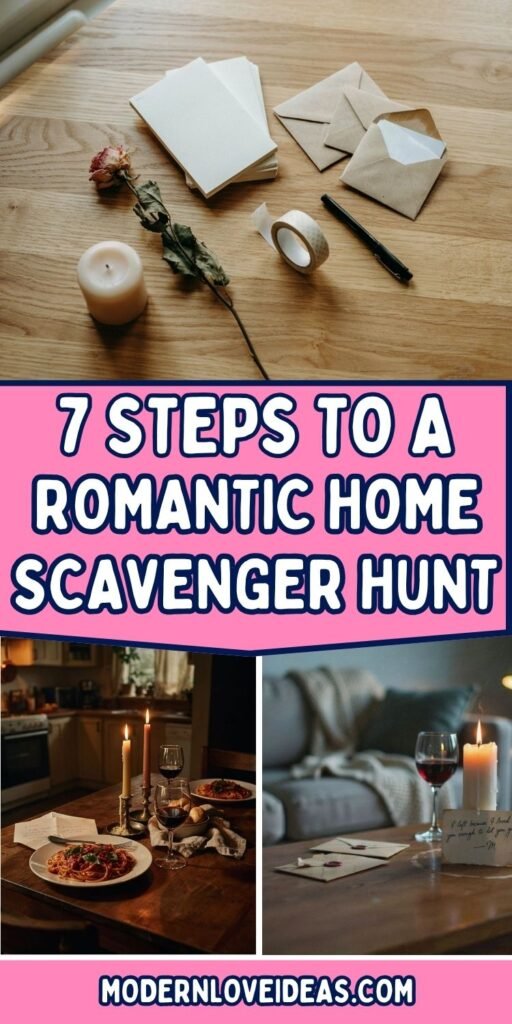
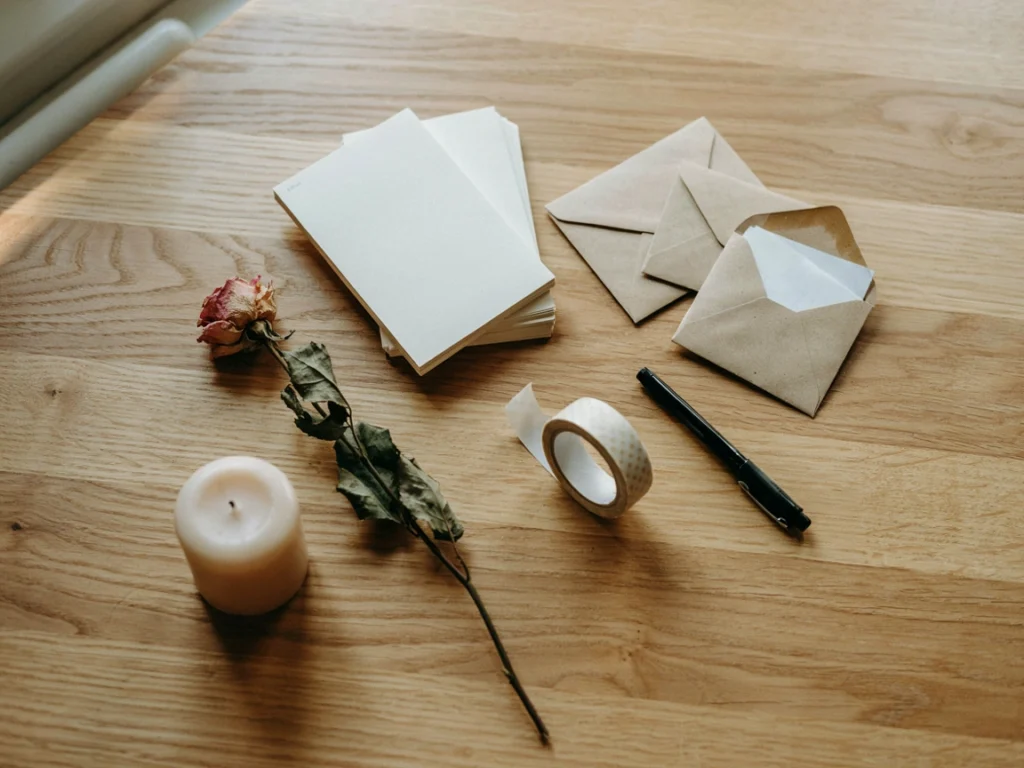
You need paper. Index cards work best, but a notebook page cut into strips works fine. You need a pen, a little tape, and something small at the end. Envelopes are nice but optional. That is the whole list.
If you want to spend nothing at all, use sticky notes and make the prize a playlist of your songs and a note that says press play. If you have ten or twenty dollars, buy card stock, a candle, and his favorite snack. If you want to spend forty or fifty, order takeout from the restaurant where you had your first date and have it waiting at the last clue.
For comparison, millennials now spend an average of $252 on a single date night. You are about to beat that night for the price of a candle.
Time is the only real cost. Give yourself twenty five minutes to write the clues and ten minutes to hide them. The hunt itself should run thirty to forty five minutes.
Space is not an issue either. This works in an apartment. Six clues fit in three rooms without any trouble.
The 7 Steps to Build Your Hunt Backward
The biggest mistake women make is starting with clue number one. Do the opposite. Build it backward, from the ending to the beginning. That one change prevents the most common flop, which is a hunt that runs out of steam right at the finish.
Step 1: Decide the prize first
Before you write a single word, decide what he finds at the end and where he finds it. Everything else gets built to lead him there.
Step 2: Pick your clue count based on the time you actually have
Four to six clues is a fifteen minute warm up before dinner. Seven to ten clues is the date itself. Ten is a ceiling, not a goal.
Step 3: Map your hiding spots before you write anything
Walk through the house and list the places. The coffee maker. The bathroom mirror. His car. His pillow. The fridge. The front door. Pick your spots first, then write clues that point to them. Writing clues first and hunting for matching spots later will make you crazy.
Step 4: Write the clues in reverse
Your last clue points to the prize. The clue before that points to the last clue. Keep working backward until you reach the front door. This takes about twenty minutes and it always works.
Step 5: Number every envelope on the back
It feels fussy. It is not. If the dog knocks a clue off the counter, or a kid moves one, the numbers save your entire night.
Step 6: Choose how clue number one arrives
Tape it to the front door so he finds it when he walks in. Text him a photo of it while he is still at work. Tuck it into his lunch. Set it on his pillow. The delivery sets the tone, so pick the one that fits him.
Step 7: Hide everything in reverse order
Start with the prize, then work back toward the door. Otherwise you will trap yourself, hiding a clue in a spot you already used for a different one.
One more thing about pacing. Keep the whole hunt under forty five minutes. Excitement fades when a game drags. A man who is hungry stops finding riddles charming right around minute fifty.
Romantic Scavenger Hunt Clues You Can Copy Right Now
Here is the rule that matters most. Personal beats clever. A clue that mentions the nickname of his car will land harder than a perfect rhyme you spent an hour on. Do not write poetry. Write something only the two of you would understand.
Below are clues you can use as they are, or swap your own details into. Each one is written to point at a hiding spot in your home.
Clues for the kitchen
For the coffee maker: “You are the first thing I want every morning. Even before this.”
For the refrigerator: “Nothing in here is as cold as I am without you. Open up.”
For the pantry: “You have a sweet tooth and I have you. Go look where the sugar lives.”
Clues for the bedroom and bathroom
For the bathroom mirror: “Look here to find the person I am most attracted to in this house.”
For his side of the bed: “My favorite place in this house has always been right next to you.”
For his dresser: “Everything you own is boring. You are not. Check the drawers.”
Clues for the living room and entry
For the front door: “This is where the bad day ends, because it means you are almost home.”
For the couch: “This is where we do nothing together. And I love doing nothing with you.”
For a framed photo: “We look so young here. I would still pick you.”
Clues for outside and everywhere else
For his car keys: “You drive me a little crazy. In the very best way.”
For the washing machine: “Not romantic. But I do love a man who runs a load without being asked.”
For the TV remote: “You are the only thing I would rather watch.”
Now make them yours. Swap the photo for the one from your honeymoon. Swap the couch for the ugly chair you keep threatening to throw out. Swap in the name of his car, his team, the song from your wedding. Two or three personal clues will do more work than twelve generic ones.

5 Hunt Themes That Match Your Partner, Not Pinterest
The best hunt is not the most romantic one. It is the one built for him. Pick the theme that sounds like your guy, not the one that sounds like you.
The memory lane hunt
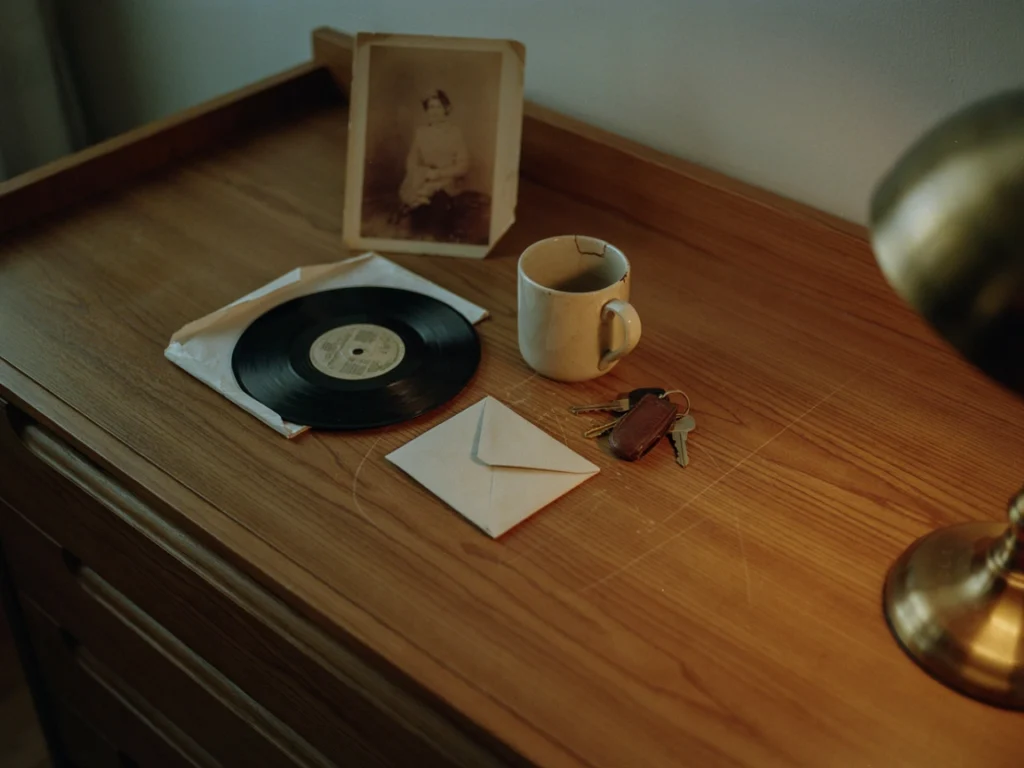
Every clue points to something from your history. The photo. The ring box. The chipped mug from your first apartment. This is the right pick for a sentimental partner, and it is the strongest choice for an anniversary.
The five senses hunt
Each clue delivers one sense. Something to taste at clue one. Something to smell at clue two. A song to hear. Something to touch. And you at the end. This works beautifully for a partner who shows love physically and does not talk much about feelings.
The competitor hunt
Add a timer. Add points. Make him earn the prize. If your husband turns a game of cards into a championship, this is his hunt.
The low energy hunt
Three clues, all within ten feet of the couch, ending with a blanket, a snack, and his show. This one exists on purpose. Some weeks are hard, and a small hunt you actually finish beats a big one you never start.
The slow burn hunt
The clues get a little bolder as they go, and the last one leads to the bedroom. Keep it playful rather than graphic. The build up is the whole point.
You can mix two of these. A memory lane hunt that ends as a slow burn hunt is a very good night.
How to End It So He Actually Remembers It
The prize should be something he lives through, not something he puts on a shelf. Researchers who studied real gift exchanges found that experiential gifts strengthened relationships more than material gifts did, and that held true whether or not the giver shared the experience with them.
So skip the gift card. Skip the thing he already asked you to buy. Those are errands, not gifts.
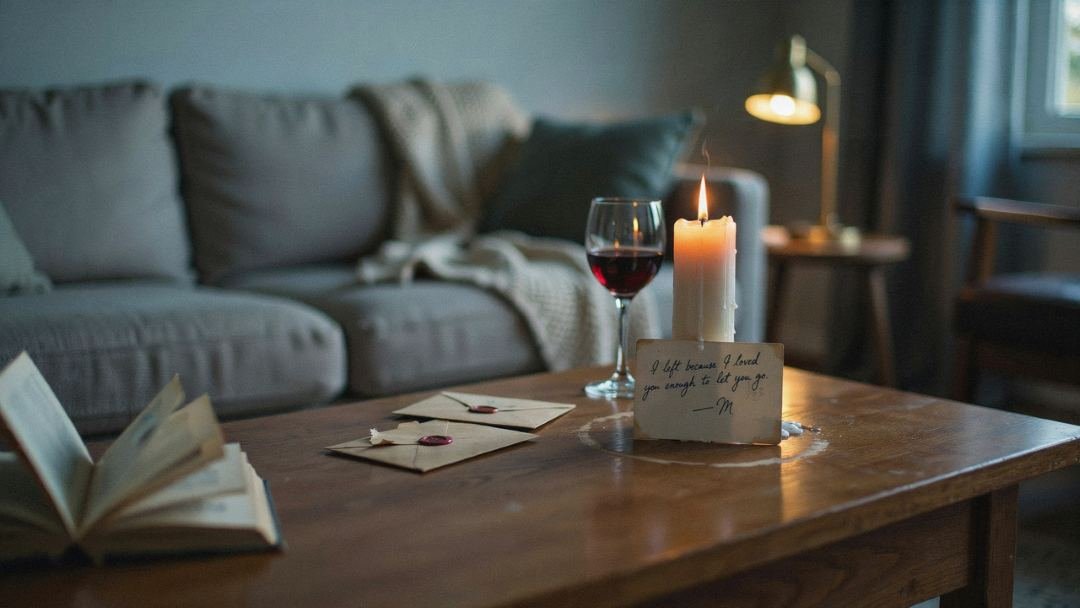
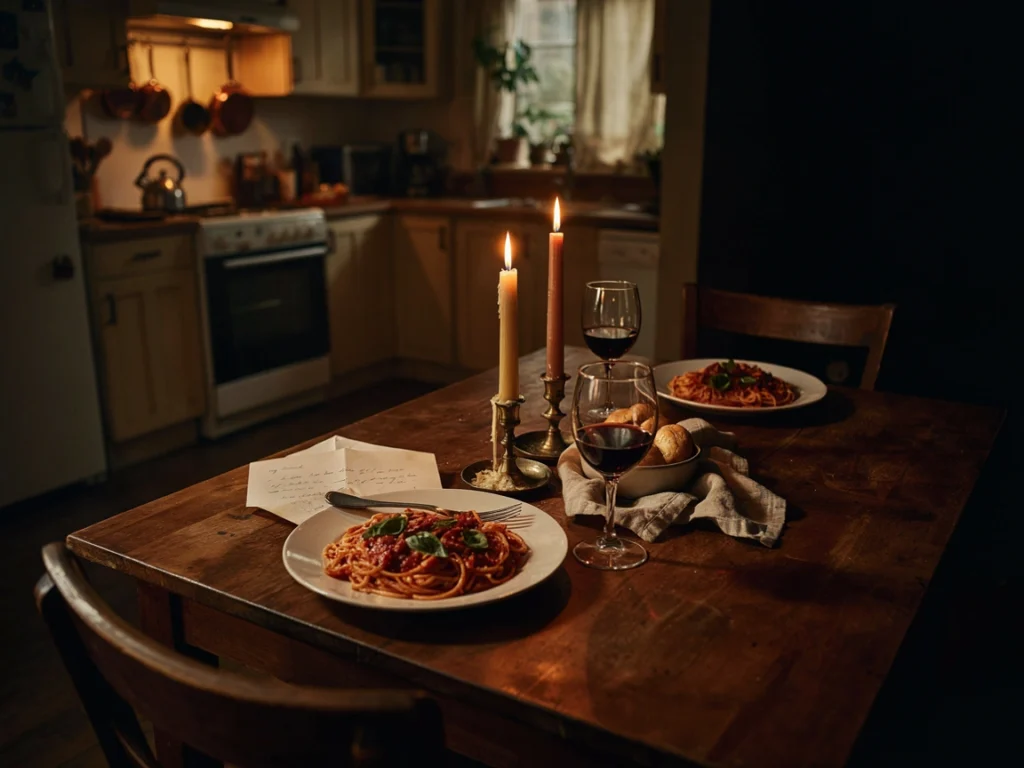
Good endings cost almost nothing. A handwritten letter he can keep. Dinner already plated and warm on the table. A coupon for one Saturday morning with no kids and no chores. A playlist of your songs, cued up. Or you, waiting.
Then do the step almost everyone skips. Afterward, ask him one question. Ask which clue was his favorite. That question turns a fun hour into a story you both tell later, and the story is the part that lasts.
5 Mistakes That Kill the Mood
I have made most of these.
Too many clues is the first one. Ten is the limit. Twelve turns a surprise into a chore.
Clues that are too clever is the second. If he stands there for two full minutes with his eyebrows scrunched, the fun has already leaked out. Aim for clues he solves in thirty seconds.
Bad timing is the third, and it is the quiet killer. Do not launch a hunt the second he walks in stressed, starving, or still on a work call. Feed him first. Let him change out of his shoes. Then start.
Building the hunt around what you would love is the fourth. This is the big one. Be honest with yourself. If he would rather have wings and a competition than rose petals and a bath, give him wings and a competition.
Needing a specific reaction is the fifth. If he is not a man who squeals, he will not squeal. Do not read that as failure. Watch what he does next instead. Watch whether he puts his phone down.
How to Pull This Off With Kids in the House
You are reading this thinking there is nowhere in your home to hide anything from anyone. Fair.
Set it up after bedtime. Tell him you are folding laundry, then move fast and hide the clues while he stays put in the other room. Fifteen minutes is enough.
Or bring the kids in for the first three clues, which they will love, then send them off with a movie and keep the last three for the two of you. The kids get the fun part. You get the ending.
If the week has been brutal, run the twenty five minute version. Four clues. One candle. One snack. No prep beyond a pen and whatever paper is on the counter.
A short hunt on a random Tuesday beats a perfect one you never get around to. That is the whole point.
Start Tonight
A romantic scavenger hunt at home works because it is new, and new is what long relationships quietly run out of. Build it backward, starting with the prize. Keep it to six or eight clues. Make them personal instead of clever. End with something he can experience, not something he can shelve.
You are not doing this because your marriage is in trouble. You are doing this because ordinary weeks slowly take the fun out of a good one, and you are the kind of woman who does something about it.
So pick your six hiding spots tonight. Write the clues on whatever paper is closest. Hide them before you lose your nerve. Then come back and tell me in the comments which clue made him laugh.