First Date Tips for Women: A Complete Guide
You spent an hour picking your outfit. You texted your friend three times about what to say. You refreshed their Instagram profile once more before putting your phone down.
But did you think about where to meet? What you’ll do if you want to leave early? What you’ll actually talk about once the small talk runs out?
Most women put almost all their first-date energy into how they look and almost none into the stuff that actually matters. That gap is what makes dates feel stressful instead of fun. And sometimes, it’s what makes them unsafe.
This first date planner for women covers everything you need to think about before you walk out the door. Safety, venue, prep, outfit, conversation, red flags, and mindset. Not fluffy advice. Real, practical steps backed by current research.
Let’s get into it.

Safety Comes Before Everything Else
Before you pick the restaurant, answer this question: does anyone know where you’re going?
If the answer is no, that’s the first thing to fix.
Planning for safety isn’t paranoid. It’s what smart, independent women do. Match.com safety data shows 82% of women prioritize public, well-lit locations for first meetings. They’re not overthinking it. They’re being practical.
Here’s what your safety plan should look like before any first date.
Tell someone where you’re going. Give them the full picture: your date’s name, where you met them (which app or how), the exact venue name and address, and when you expect to be home. A screenshot of their profile works well too.
Share your live location during the date. Both iPhones and Android phones let you share your location in real time with a trusted contact. Use it. Text your friend when you arrive and when you leave.
Set up a check-in call. Arrange for a friend to call you about 30 to 40 minutes into the date. If everything is fine, you pick up and say so. If you want out, you have a ready-made excuse. It takes two minutes to arrange and can save you hours of discomfort.
Get yourself there and back. Do not accept a ride from your date to the venue, and do not let them drive you home. Use your own car, public transport, or a rideshare. Have enough cash or a charged phone to get yourself home on your own no matter what happens. Bumble’s safety expert Julie Spira puts it simply: “On a first date, you should never have anyone pick you up at home.”
Keep your personal details private. Don’t mention your home address, office address, or whether you live alone. That information is for people you know and trust. Not a first date.
How to Choose a Venue That Makes the Date Work for You
The classic first date formula, dinner and a movie, is on its way out. The data agrees.
Tinder’s Year in Swipe 2025 report found that the number one first date vibe in 2026 is something playful and low-pressure. High-stakes restaurant dinners create pressure. Pressure makes people perform instead of connect.
And practically speaking, 41% of singles are now skipping expensive dates or choosing free activities instead. A walk with coffee isn’t a cheap date. It’s the new standard.
Here’s what actually works for a first date venue.
Go public. Always. A busy coffee shop, a casual restaurant, a park in the daytime, a museum, a bowling alley. The goal is to be somewhere with other people around, somewhere you can easily leave if you need to, and somewhere you can actually hear each other talk.
Check out these 25 ideas for a fun first date.

ZipDo’s 2025 first date research found that 58% of singles prefer venues within 30 minutes of their own home. That’s not laziness. It’s common sense. You want to feel comfortable, not stuck somewhere unfamiliar.
Activity dates are underrated. Mini golf, pottery, a cooking class, an escape room. These take pressure off the conversation because you have something to focus on together. Research from Science of People notes that shared activities reduce what psychologists call “dyadic stress”, which is the pressure that builds when two people rely entirely on conversation to fill time.
Have a backup plan. Things fall through. Restaurants close. Weather changes. Have two solid venue options ready so if your first choice doesn’t work, you’re not scrambling.
Avoid: their home, your home, a loud bar where you can’t hear each other, or anywhere that feels isolated. If they push back on a public venue, that’s a red flag on its own.
Three venue formulas that work
1. Free option: a walk in a nice park followed by grabbing a takeaway coffee. Low pressure, easy to extend if things are going well, easy to end early if they’re not.
2. Low cost option: a casual spot with good food and a relaxed atmosphere. Not a fancy restaurant. Somewhere you’d feel comfortable showing up in jeans.
3. Activity option: something hands-on and fun, like mini golf, a market, or a gallery. Built-in conversation topics. Natural breaks. Less awkward silence.
What to Do the Night Before (That Actually Helps)
The night before a date, most women either overthink everything or do nothing at all. Neither helps.
Here’s what actually makes a difference.
Confirm the time and place. Send a short, simple text the day before to confirm you’re both still on. Something like: “Still good for tomorrow at 7 at [place]?” This shows you’re organised and takes away the will-they-cancel anxiety.
Review their profile once. Not to obsessively research them. Just to remind yourself of one or two things you can bring up naturally. If they mentioned they love hiking, you have an opener. A quick profile review before an app-based date is genuinely useful. Knowing they’re vegetarian before suggesting a steakhouse is just basic consideration.
Lay out your outfit tonight. Don’t leave it to the last 45 minutes tomorrow. Research found that people wearing brand-new clothes on a date touched or adjusted their outfit 40% more often than those in familiar clothing. That constant fidgeting disrupts eye contact and breaks conversation flow. Wear something you’ve worn before and already know you feel good in.
Cut back on the pre-date texting. Excessive back-and-forth before the date uses up the novelty of actually meeting. Save it for the real conversation.
Get clear on your dealbreakers. Dating coach Erika Ettin, founder of A Little Nudge, advises women to know what they’re looking for before they walk in, not after. You don’t need a rigid list. But having some clarity on what you won’t accept means you’ll notice red flags instead of explaining them away.
Get enough sleep. This sounds obvious. It’s not always what happens. You’ll be more present, more relaxed, and more yourself when you’re rested.
When the logistics are handled the night before, your brain is free to actually enjoy the date tomorrow.
What to Wear: What the Research Actually Says
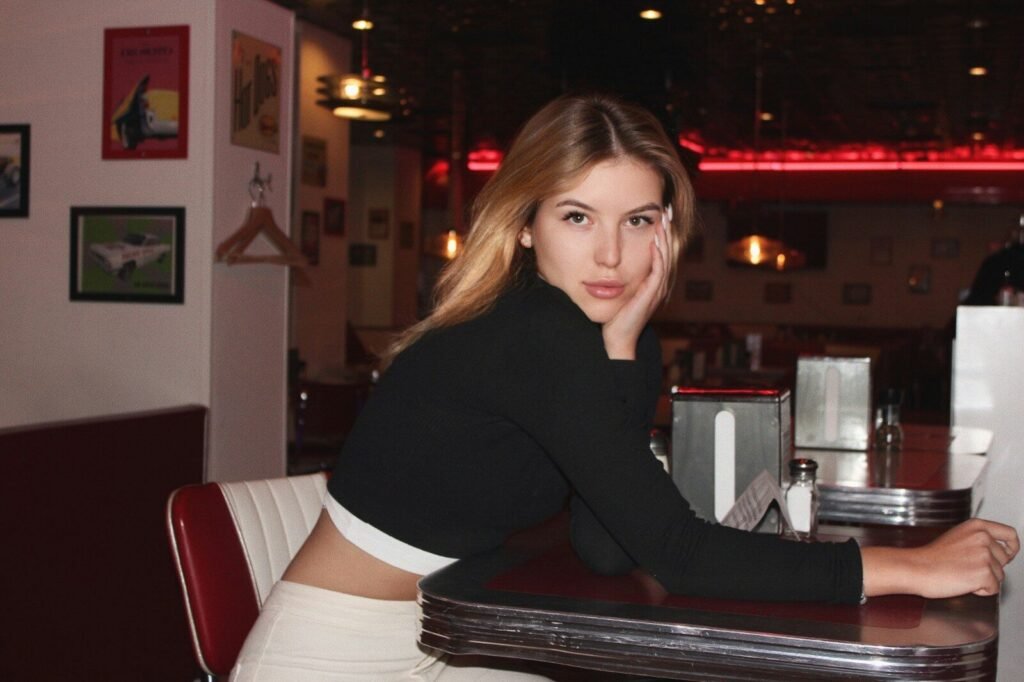
The goal with your outfit isn’t to look perfect. It’s to feel like yourself, dressed for the occasion.
There’s real science behind this. It’s called enclothed cognition. A meta-analysis published on PubMed found that what you wear changes how you think and behave. Nearly half of respondents confirmed that clothing choices had a measurable effect on their confidence. What you wear shapes how you carry yourself. And how you carry yourself shapes how your date sees you.
So the question isn’t just “does this look good?” It’s “do I feel like myself in this?”
Here are the things that actually matter.
Wear something you already own and love. Brand-new clothes haven’t been broken in. They’re uncomfortable in small ways you haven’t noticed yet. That discomfort shows up in your body language. Stick with something you know works.
Dress about 15% above your normal style for that venue. Not transformed. Just elevated. A coffee date might mean your favourite jeans with a nicer top. A dinner date might mean a midi dress you already own. The goal is polished-you, not unfamiliar-you.
Color matters more than you’d think. A field study published in Evolutionary Psychology analyzed 546 daters and found that both men and women wore more red and black on dates. Red signals confidence and attraction. Black reads as composed and self-assured. These aren’t rules. But they are patterns backed by data.
Keep makeup moderate. A 2020 study found that heavy makeup, particularly around the eyes, was associated with appearing less warm and less relatable. Wear enough to feel confident. Not so much that you don’t look like yourself.
Skip the heavy perfume. Research shows 31% of people find strong fragrance off-putting during close interactions. Light application or nothing is the safer call.
And remember: 55% of first impressions are shaped by appearance and are formed in under 30 seconds. Your outfit does a lot of talking before you open your mouth. Make sure it’s saying something true about you.
How to Have a Real Conversation (Not Just Fill Silence)

Here’s a misconception that ruins a lot of first dates: the goal is to be interesting.
It’s not. The goal is to make your date feel interesting. There’s a difference.
When people feel heard and curious, they leave the date thinking they had a great time. That good feeling gets attached to you, even if you said less than them.
The research backs this up. Hinge Labs’ D.A.T.E. Report surveyed around 30,000 daters worldwide and found that 85% of people are more likely to want a second date when they’re asked thoughtful questions. And yet, most people aren’t asking enough of them.
There’s also a gap worth knowing about. 49% of heterosexual women are hesitant to start deep conversations on a first date because they want the other person to go first. But 65% of men say they actually want those more meaningful chats from the start. Both sides are waiting for the other to begin. Someone has to go first. It can be you.
Stop the rapid-fire questioning. A Stanford speed-dating study found that rapid-fire questioning actually predicted date failure. Dates that worked had storytelling, shared laughter, and went deeper on fewer topics. An interview format makes people feel evaluated, not understood.
Use follow-up questions. Harvard research shows that follow-up questions, the ones that dig deeper into what someone just said, are the single most powerful question type for building likability on a date. If they mention they love hiking, don’t just nod and move on. Ask where their favourite trail is, or what got them into it.
Talk about travel. Psychologist Richard Wiseman ran a large speed-dating experiment and found that conversations about travel led to roughly double the second-date rate compared to talking about movies. 18% of couples who discussed travel wanted a second date. Only 9% of those who discussed films did. Travel topics get people talking about dreams, memories, and what excites them. Movies lead to debates about taste.
Listen 70% of the time. Most people talk more than they listen on dates because talking about yourself activates the brain’s reward system. Fight that urge. Dating research consistently shows that the dates leading to second dates are the ones where both people feel heard.
Pull threads, don’t switch topics. When they share something interesting, stay with it. Go deeper. This is what makes a conversation feel like a real exchange instead of a checklist.
Three conversation openers that work
- “If you were awarded an honorary PhD in any topic, what would it be?” This comes from Skip the Small Talk, an organisation that uses psychology research to help people connect. It lets someone nerd out about something they love without being too vulnerable too early.
- “What’s the most interesting thing that happened to you this month?” This gets you into real life instead of the usual resume recap.
- “What kind of trips do you like to take?” Not “have you travelled recently” but what kind. Open, specific, and it goes somewhere interesting.
Red Flags to Know Before You Go
Not every date will be good. Some will be fine but not a fit. A small number will feel genuinely off. Knowing the difference ahead of time means you won’t second-guess yourself in the moment.
Here are the red flags that show up on first dates and what to do when they do.
They insisted on a private location. If they pushed to meet at their place, your place, or anywhere without other people around, take that seriously. A genuine person who wants a real connection won’t make you feel unsafe before you’ve even met. If they push back on a public venue choice, that’s a signal worth listening to.
They’re rude to the staff. Tinder’s Year in Swipe 2025 report found that 54% of daters say rudeness to hospitality staff is their number one dating ick. This one is worth paying attention to. How someone treats a server or barista when they think it doesn’t count, tells you who they actually are.
Something feels off and you can’t explain it. Trust that feeling. You don’t need a clear reason to feel uncomfortable. A genuine person who wants a real relationship won’t be secretive or evasive about basic details.
They’re pushing you to stay longer, drink more, or go somewhere else. A good date respects your pace. Pressure is not a good sign.
How to Leave If You Need To
You are allowed to leave. That’s not rude. It’s self-awareness.
Set a natural endpoint before you go. Tell your date you have plans later, or need to be somewhere by a certain time. This gives you a built-in way to exit without the conversation becoming awkward. It also means you don’t end up stuck at a bar for four hours when you knew after 45 minutes it wasn’t right.
If you’re using your check-in call to leave, answer it, make it clear you need to go, and do exactly that. No lengthy explanations needed. “I have to head out, but it was really nice to meet you” is a complete sentence.
If the date went well but you’re not interested in a second one, don’t make promises you won’t keep. Vague assurances like “we should do this again sometime” are only confusing. A polite, honest close is kinder than a false hope.
Do not go back to their place, or let them come to yours, after a first date where something felt off. Once you’re out of the public space, you lose the safety net it provides. No explanation is needed to go straight home.

The Mindset That Will Actually Make the Date Better
This is not an audition. You don’t owe anyone a performance.
One of the most common mistakes women make on first dates is walking in already trying to be chosen. When that’s your goal, everything becomes about managing how you come across. You stop listening. You stop being curious. You start performing.
The American Psychological Association notes that people consistently overestimate how awkward deep conversations will feel and underestimate how much the other person actually wants genuine connection. Your date is likely just as nervous as you are. They’re probably also hoping you’ll go first.
Think of the first date as a vibe check, not a verdict. You are also gathering information about whether this person is worth your time. That’s not harsh. It’s honest.
Tinder’s research found that 56% of singles say honest conversation matters most in 2026. The top emotional keyword for dating this year is “hopeful.” Not perfect. Not impressive. Hopeful. People want warmth and realness. Not the best version of you. The real one.
Nerves are normal. They don’t mean anything is wrong. Some of that nervous energy is actually excitement. Naming it, even just quietly to yourself, can help.
And finally: don’t make a final call based on one date alone. Relationship expert Rachel DeAlto suggests giving someone three to five dates before deciding. Social anxiety, nerves, and first-impression pressure can hide someone’s real personality. One in four singles reports being genuinely surprised by how much attraction grew by date two or three. Chemistry sometimes needs a little time to show up.
Your Quick Pre-Date Checklist
Save this or screenshot it before your next date.
Safety
- Tell a trusted friend the date details (name, venue, time, how you met them).
- Share your live location with them during the date.
- Set up a check-in call for 30 to 40 minutes in.
- Arrange your own transport both ways.
- Do a quick video call beforehand if you met online.
Venue
- Choose a public place where you feel comfortable.
- Pick somewhere within 30 minutes of home if possible.
- Have a backup venue option ready.
The Night Before
- Confirm the time and place by text.
- Skim their profile once for a natural conversation opener.
- Lay out your outfit tonight, not tomorrow morning.
- Cut back on pre-date texting to keep the novelty alive.
Outfit
- Wear something you’ve worn before and already feel good in.
- Dress about 15% above your usual style for that venue.
- Keep makeup moderate and fragrance light.
Conversation
- Remember: listen 70%, talk 30%.
- Go deep on fewer topics instead of covering everything.
- Ask follow-up questions. Pull threads. Stay curious.
- Have 2 or 3 conversation openers in mind, not a script.
Mindset
- This is a vibe check. You’re also evaluating them.
- You don’t need to be perfect. You need to be present.
- Trust your gut. You can leave if you need to.
You Don’t Need to Be Perfect. You Need to Be Prepared.
A good first date doesn’t happen by accident. It happens because you showed up safe, clear-headed, and genuinely yourself.
You don’t need to be charming every second. You don’t need to say the perfect thing. You don’t need to look like someone you’re not. What you do need is a plan for the basics, the safety, the venue, the conversation, the exit, so that when you’re sitting across from someone, your brain is free to actually be there.
That’s what makes a first date worth having.
Save this first date planner for women before your next date. And if these first date tips helped, share it with a friend who’s heading out soon too.