

How to Start Dating After Divorce in Your 40s
You signed the papers. The house sold. And you haven’t been on a date in over a decade.
Now people are talking about “ghosting” and “love bombing” and apps you’ve never heard of. The whole thing feels like someone handed you a map to a city you’ve never visited, in a language you don’t speak.
That feeling is completely normal. And it doesn’t mean you’re too old, too broken, or too complicated to find love again.
Dating after divorce in your 40s is different from dating in your 20s. Your life is fuller. Your time is limited. Your standards are higher. And you have a much clearer picture of what you will not put up with anymore. Those are not weaknesses. They are advantages.

This guide will walk you through how to know if you’re ready, how to build an honest profile on the right app, how to protect your kids while still protecting your heart, and what red flags to watch for in others, and in yourself.
No fluff. No false promises. Just real steps you can take right now.
Are You Actually Ready to Date Again?
This is the question most women in their 40s are afraid to answer honestly.
Not because they don’t want to date. But because they’re scared the answer might be no.
Here’s the truth: readiness isn’t about being perfectly healed. It’s about being honest with yourself. There’s a big difference between dating because you’re curious and open, and dating because you’re lonely, scared, or trying to numb the pain of your divorce.
One move comes from a healthy place. The other tends to create more pain.
Ask Yourself These Questions Before You Download Any App
Can you talk about your divorce without going into a rage or crying for 20 minutes? Do you blame your ex for everything, or can you honestly see your own part in what went wrong? Do you feel mostly okay being alone, or does the silence feel unbearable?
You don’t need perfect answers. But if every answer triggered a flood of raw emotion, you may need a few more months before dating feels like an opportunity instead of an escape.
Certified couples’ therapist Alicia Muñoz, LPC, puts it this way: “Future relationships tend to do better if you take some months, or even as long as a year, to really experience the loss of your marriage.”
What the Research Actually Says About Timing
Research from the Journal of Family Psychology found that people who wait at least 12 to 18 months before entering a serious relationship after divorce report higher satisfaction in those relationships.
That doesn’t mean you have to wait 18 months. It means rushing often backfires.
According to a 2019 Worthy survey, 32% of people start dating while they’re still going through their divorce. Only 9% wait one to two years. And the median time between divorce and remarriage in the U.S. is about 3.7 years, which is much longer than most people expect when they’re sitting in the middle of it.
Your timeline belongs to you. But be honest about why you’re moving at the pace you’re choosing.
The Loneliness Trap
One of the most common mistakes women make after divorce is confusing loneliness with readiness.
Loneliness feels urgent. It pushes you toward anyone who seems warm and interested. That urgency can make you ignore red flags, move too fast, and end up in a relationship that repeats the same patterns as your marriage.
Therapist Jean-Claude Chalmet describes it this way: “When a marriage ends, people often live in the past or in the future. Learning to understand what you need now, and have fun, is a skill you must acquire.”
Dating from a place of curiosity is very different from dating from a place of panic. Aim for curiosity.
How to Figure Out Who You Are Before You Start Dating Someone New

After a long marriage, a lot of your identity got tangled up in being someone’s wife.
That’s not a flaw. It’s what happens when you share your life, your home, your finances, and your future with another person for years or decades. When that ends, many women describe feeling like they don’t know who they are anymore.
One woman, Sandra Buttry, wrote about entering the dating world in her 40s after a 16-year marriage with four daughters. She described it as “arriving late to a conversation everyone else already understood.” She wasn’t behind. She was just new.
This phase, before you start dating, is actually one of the most valuable windows in your adult life. You get to decide who you are now.
Why Knowing Your Attachment Style Matters
Your attachment style is basically how you behave in close relationships, especially when you feel stressed, rejected, or unsure.
Most people are either secure, anxious, or avoidant. Knowing which one you are helps you understand why you pull away from certain people, why you feel clingy with others, and what you actually need to feel safe in a relationship.
This isn’t therapy-speak. It’s practical self-knowledge that makes dating much less confusing.
Therapist Lara Farrokh, LCSW, recommends starting with the book Attached by Amir Levine and Rachel Heller. It’s an easy read, and it will explain more about your relationship patterns than most people learn in years of dating.
Should You See a Therapist Before You Start Dating?
You don’t have to. But it helps more than most people expect.
Even 4 to 6 sessions with a therapist before you start dating can help you identify unhelpful patterns, process lingering anger or grief, and walk into new connections with more clarity.
You can find affordable options through BetterHelp, Talkspace, or the Psychology Today therapist finder. Many therapists offer sliding scale fees.
The goal isn’t to fix everything before you date. The goal is to know yourself well enough that you don’t repeat the same relationship on a different person.
Which Dating App Should You Actually Use
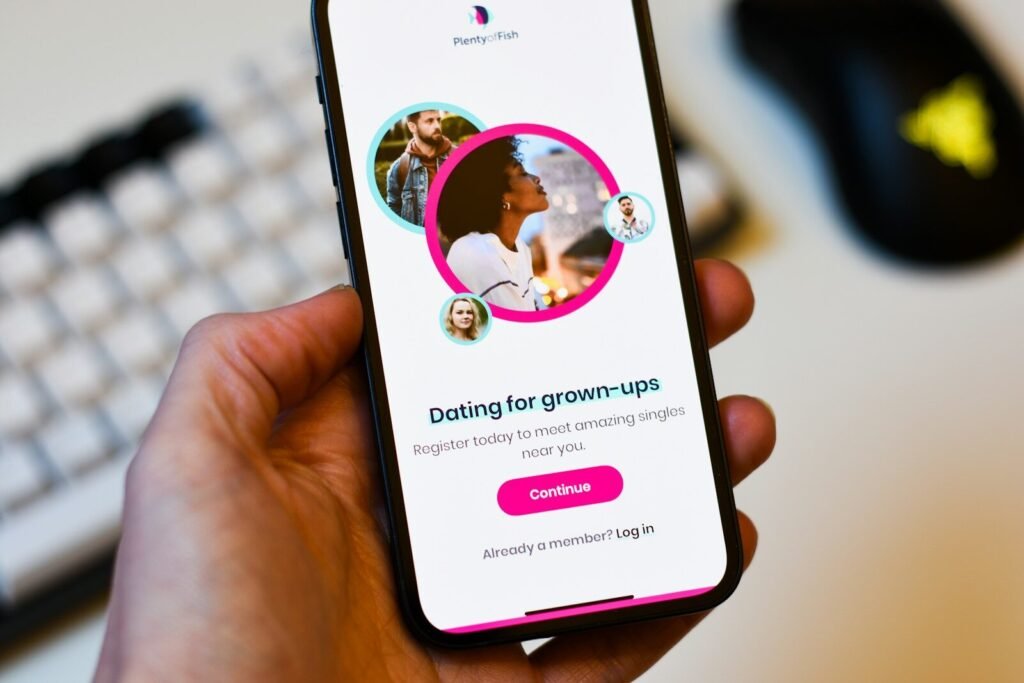
If you haven’t used a dating app before, you are not behind. You are exactly where millions of 40-something divorced women are.
About 37% of adults between 30 and 49 have tried online dating, according to Pew Research. It’s a normal place to meet people. The apps have improved a lot, and the over-40 demographic is now one of the largest groups using them.
The trick is picking the right one for what you’re actually looking for.
Match.com
Best overall for women in their 40s who want a real relationship. The user base skews older and more serious. You can filter by whether someone has kids, what they’re looking for, and where they are in life. Match.com describes its over-40 demographic as professionals seeking partners at a similar life stage.
It’s not free, but the paid version is worth it. Paying tends to attract people who are more serious.
eHarmony
Best if you want structure and science behind your matches. eHarmony uses a compatibility questionnaire to connect you with people who align with your values, not just your zip code. It takes longer to set up, but the matches tend to be more intentional.
Bumble
Good for women who want to be in control of the first move. On Bumble, only women can send the first message. That one feature removes a lot of the noise. You can also select “divorced” as your relationship status, which helps signal your situation to potential matches.
Hinge
Good middle ground between casual and serious. Hinge prompts you to answer questions on your profile, which makes it easier to show your personality rather than just your photos. It tends to attract people who want to actually go on dates.
SilverSingles
Best if you’re closer to 50 or older. SilverSingles is built specifically for the 50+ crowd and focuses on people who have been through significant relationships before.
How to Write a Profile That Actually Works
Be honest about who you are. You don’t need to mention your divorce in your opening line, but don’t hide it either. You have kids? Say so. You have a job you love? Say so. You’re not looking for anything casual? Say so.
One photo should be recent, clear, and show your face. Smile. Look like yourself.
You don’t need to write a novel in your bio. Two or three sentences that sound like you is enough. Skip the list of hobbies. Tell someone something that actually starts a conversation.
Red Flags to Watch For Online
According to matchmaker Susan Trombetti of Exclusive Matchmaking, these are warning signs that something is off:
They refuse to video call before meeting. Their reason is always “my camera is broken.” This is a classic sign that they are not who their photos claim to be.
They ask for money. For any reason. A sick family member, a stranded trip, a business crisis. Do not send money to anyone you have only met online.
They declare love within a week or two. This is called love bombing, and it is a manipulation tactic, not a genuine connection.
Their profile looks too perfect. Model appearance, vague career, claims to be “independently wealthy.” If it seems too good to be true, it is.
They push to move the conversation off the app right away. Scammers do this to get your personal information and avoid the safety features built into the app.
They talk about their ex constantly, and always as the villain. An emotionally healthy person has processed their past and can speak about it without rage.
Trust your instincts. If something feels off, it usually is. You’ve spent years developing good judgment. Use it.
How to Date When You Have Kids

You want a partner. Your kids need stability. Those two things can feel like they’re pulling in opposite directions.
They don’t have to.
The key is sequencing. You keep your dating life and your parenting life separate, at least for a while. You protect your children from attachments to people who may not stay. And when the time is right, you introduce someone carefully and slowly.
When to Tell Your Kids You’re Dating
You don’t need to tell your kids anything until there is someone worth telling them about. Casual dates, early conversations, and first meetings with strangers from apps do not need to be announced to your children.
When you are in a relationship that feels real, stable, and likely to last, that is when the conversation happens. Use age-appropriate language. Be honest that you met someone. Let them ask questions. Don’t ask them to be happy about it right away.
When to Introduce a New Partner to Your Kids
Dr. Ann Gold Buscho, psychologist and author of The Parent’s Guide to Birdnesting, recommends waiting until you are in a committed relationship of at least 9 to 12 months after the divorce is finalized.
Psychologist Dr. Gilman, cited by OurFamilyWizard, agrees: “The number one mistake that I’ve seen divorced parents make is introducing the kids too soon. It should only happen if the relationship becomes serious.”
Her practical checklist before any introduction:
You’ve been dating this person for at least 6 months. You genuinely see this person remaining in your life. The relationship feels stable, not exciting-but-uncertain. Your children have had time to adjust to the new family structure after the divorce.
The American Academy of Pediatrics also recommends keeping clear separation between your dating life and your parenting responsibilities until the relationship is serious and stable.
What About Your Co-Parent?
You don’t owe your ex a detailed update on your dating life. But if you’re moving toward introducing someone to your children, giving your co-parent a heads-up in advance is smart. It reduces conflict, and it models healthy communication for your kids.
Also check your parenting agreement. Some agreements include clauses about when and how new partners can be introduced to children. If yours does, follow it. Violating it can lead to court issues you don’t want.
Tools like OurFamilyWizard or the BestInterest app can help you keep co-parenting communication clean and separate from your personal life.
Your Kids Will Adjust. So Will You.
Children are resilient when they feel secure. They need to know that you are stable, that they are loved, and that your dating life does not change their place in your life.
Reassure them often. Let them process slowly. And remember: taking good care of yourself is part of taking good care of them.
What’s Actually Better About Dating in Your 40s

Here’s what no one tells you when you’re staring at a dating app for the first time after 15 years of marriage.
You are not starting over. You are starting wiser.
You Know What You Will Not Tolerate
In your 20s, you might have ignored red flags because you were still figuring yourself out. In your 40s, you’ve already lived through the cost of ignoring them.
You know which behaviors drain you. You know what a relationship without respect feels like. You know what you want in a partner, and more importantly, you know what you don’t.
That clarity is rare. Most people spend years trying to get it.
Dates in Your 40s Are More Intentional
Women dating in their 40s have jobs, children, schedules, and lives that matter. They don’t have time for someone who isn’t serious. And neither do the people they’re meeting.
This means less game-playing. People say what they want more quickly. Conversations go deeper faster. The filters that took months to drop in your 20s tend to come off within a few honest dates.
It’s Okay to Do It Differently This Time
Therapist Jean-Claude Chalmet counseled a couple who married in their 50s and chose to live five minutes apart rather than together. They both had adult children, separate interests, and no desire to fully blend their lives. They spent a lot of time together. They kept their own space. They had a strong, genuine partnership.
That is not a compromise. That is a design choice.
You get to decide what your next relationship looks like. It doesn’t have to match any model you’ve seen before.
Chalmet also makes a point that surprises many women: after divorce, dating multiple people at the same time is not only okay, it may actually help. It gives you a broader picture of what’s out there, helps you compare what you feel with different people, and keeps you from over-investing too early in someone who may not be right for you.
This isn’t about being careless. It’s about being wise with your time and your heart.
Your Checklist Before You Start Dating Again
Knowing what to do is not the same as doing it. Here is a simple checklist to help you decide if you’re ready to take the first step.
Your divorce is legally finalized.
You can talk about your marriage without being hijacked by anger or grief.
You have at least one thing in your life, a hobby, a friendship, a goal, that belongs only to you.
You understand your basic attachment style. (Read Attached by Amir Levine and Rachel Heller if you’re not sure.)
You know your dealbreakers. Not a wishlist of perfect qualities, but the actual things you will not accept.
Your children’s routine is stable and your co-parenting communication is functional.
You’ve had at least one honest conversation with a therapist or trusted friend about what went wrong in your marriage and your own role in it.
You feel mostly okay being alone. Not perfectly okay. Mostly.
If you checked most of those boxes, you’re ready to take a small step forward.
The One Thing to Do This Week
Pick one app from the list above. Download it. Fill out a basic profile.
You don’t have to publish it yet. You don’t have to start swiping. Just start.
The hardest part of getting back out there isn’t knowing what to do. It’s doing the first small thing. Once you’ve done that, the next step is easier.
Dating after divorce in your 40s won’t look like dating in your 20s. And that’s exactly the point.