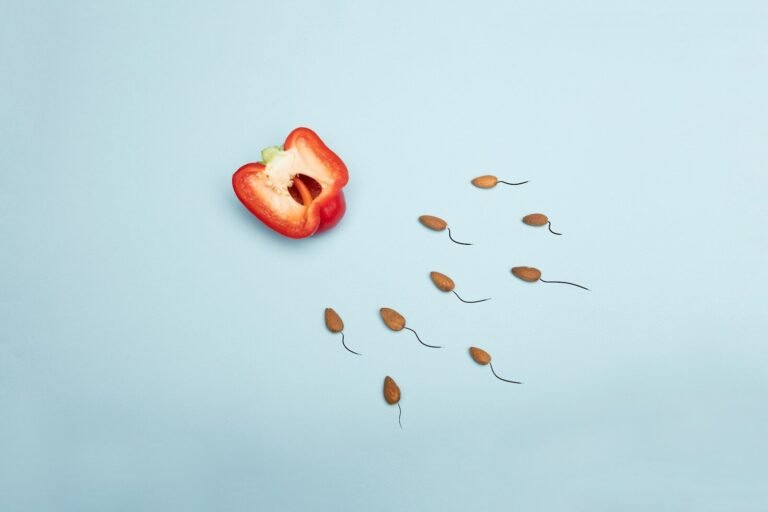

The Wet Truth About Female Squirting — What Science Actually Says
It splashes across bedroom folklore, dominates adult entertainment, and sends half the internet into a panic about laundry. But what is female squirting, really?
We dug into the peer-reviewed research so you don’t have to pretend you’re reading it “for science.”

Let’s be honest: squirting has a PR problem. Thanks to a certain genre of internet video, it’s been mythologised into some kind of Niagara Falls–level achievement of female pleasure — and simultaneously dismissed by skeptics as just, well, a bathroom accident with good timing. The truth, as ever, is gloriously more complicated.
So what actually is it?
Squirting — not to be confused with female ejaculation, its quieter, more modest cousin — is the release of a significant volume of fluid from the urethra during arousal or orgasm. We’re talking anywhere from a few tablespoons to, in rare cases, a quantity that has sent many a well-meaning partner scrambling for fresh sheets.
Ultrasound research has confirmed it originates from the bladder, which fills rapidly during sexual arousal and empties during the squirt itself. A 2024 qualitative study published in the Journal of Sexual Medicine explored women’s firsthand experiences of the phenomenon and found the emotional range runs from “heightened arousal” all the way to “mortified humiliation” — often depending on whether a towel was involved.
The fear of making a mess is, statistically speaking, the number one thing standing between a woman and squirting. Waterproof mattress protectors are genuinely underrated.
Is it pee? (The question everyone is too polite to Google)

Oh, you’re going there. Good. We all should.
The short answer: kind of, sort of, but not really — and the distinction matters more than you’d think. Chemical analysis shows the fluid contains urea, creatinine, and uric acid — yes, the hallmarks of urine. However, it also contains prostate-specific antigen (PSA) secreted by the Skene’s glands (the female equivalent of the prostate), which is definitively not found in regular urine.
A peer-reviewed study from Okayama University used dyed saline to trace the fluid’s origin and confirmed bladder involvement in every participant — but four out of five also tested PSA-positive, confirming Skene’s gland secretions in the mix. Think of it as urine’s sophisticated, well-connected acquaintance rather than urine itself.
The Okayama University research concluded the fluid is best understood as diluted urine combined with Skene’s gland secretions, which, for practical purposes, looks, smells, and behaves like water.

Squirting ≠ ejaculation (yes, they’re different)
This one trips people up constantly. Female ejaculation is the release of a small amount — usually less than a teaspoon — of thick, milky, PSA-rich fluid from the Skene’s glands. Squirting is the larger gush from the bladder. Many women do both simultaneously; some do one without the other. Treating them as the same thing is like confusing champagne with sparkling water.
Related? Absolutely. Identical? No.

Why can some women squirt and others can’t?
Here’s where pornography has done perhaps its most lasting damage to expectations: not every woman squirts, and that is entirely normal.
The ability is heavily influenced by anatomy — specifically the size, position, and functional capacity of the Skene’s glands. Some women simply don’t have the anatomical setup for it, and no amount of technique, patience, or YouTube tutorials will change that.
A large-scale Swedish cross-sectional study of 1,568 women found that among those who had never squirted, only one-third even wanted it to happen — suggesting that for many women, it’s simply not on the wish list, and that’s perfectly fine.
The same study found squirting occurred consistently (i.e., regularly during sex) in just 7% of those who’d experienced it at all, which puts the pornographic frequency of the act into rather sharp relief.

The 5-step practical guide … if you’re curious
- Relax first, everything else second. Anxiety is the single biggest obstacle. The environment needs to feel safe, unhurried, and low-stakes.
- G-spot stimulation with firm, rhythmic pressure. About two to three inches inside the front vaginal wall, which is spongy in texture. A “come hither” motion, consistently applied, is more effective than speed or force.
- Prepare mentally for the urge-to-urinate sensation. This is the most common stopping point. The sensation is physiologically similar to squirting; learning to relax through it rather than clench against it is the key skill.
- Don’t change what’s working. When close, maintain rhythm and pressure. Changing technique at the critical moment resets everything.
- Remove the mess anxiety entirely. A waterproof blanket or towel changes the psychological calculus completely. Fear of wet sheets is a genuine physiological inhibitor.

The bigger picture and what actually matters
Squirting is a real, well-documented physiological phenomenon. It is not a measure of orgasm (a woman can climax without squirting; she can squirt without climaxing).
It is not a superpower. It is not, per the research, something most women rate as the pinnacle of sexual experience — it ranges from pleasant to unremarkable depending on the individual.
What the research does consistently show is that pressure — performance anxiety, goal-fixation, partner expectation — is reliably counterproductive to both pleasure and squirting itself.
Squirting is simply one of the many ways the female body can respond to pleasure. The goal is always pleasure itself. Everything else is a possible side effect.
The female body is diverse. Some women gush dramatically; some produce a trickle; some leak without force; many never squirt at all and have extraordinary sex lives regardless. None of these is better or more valid than any other.
The moment squirting becomes a performance target rather than an incidental experience, you’ve already missed the point.